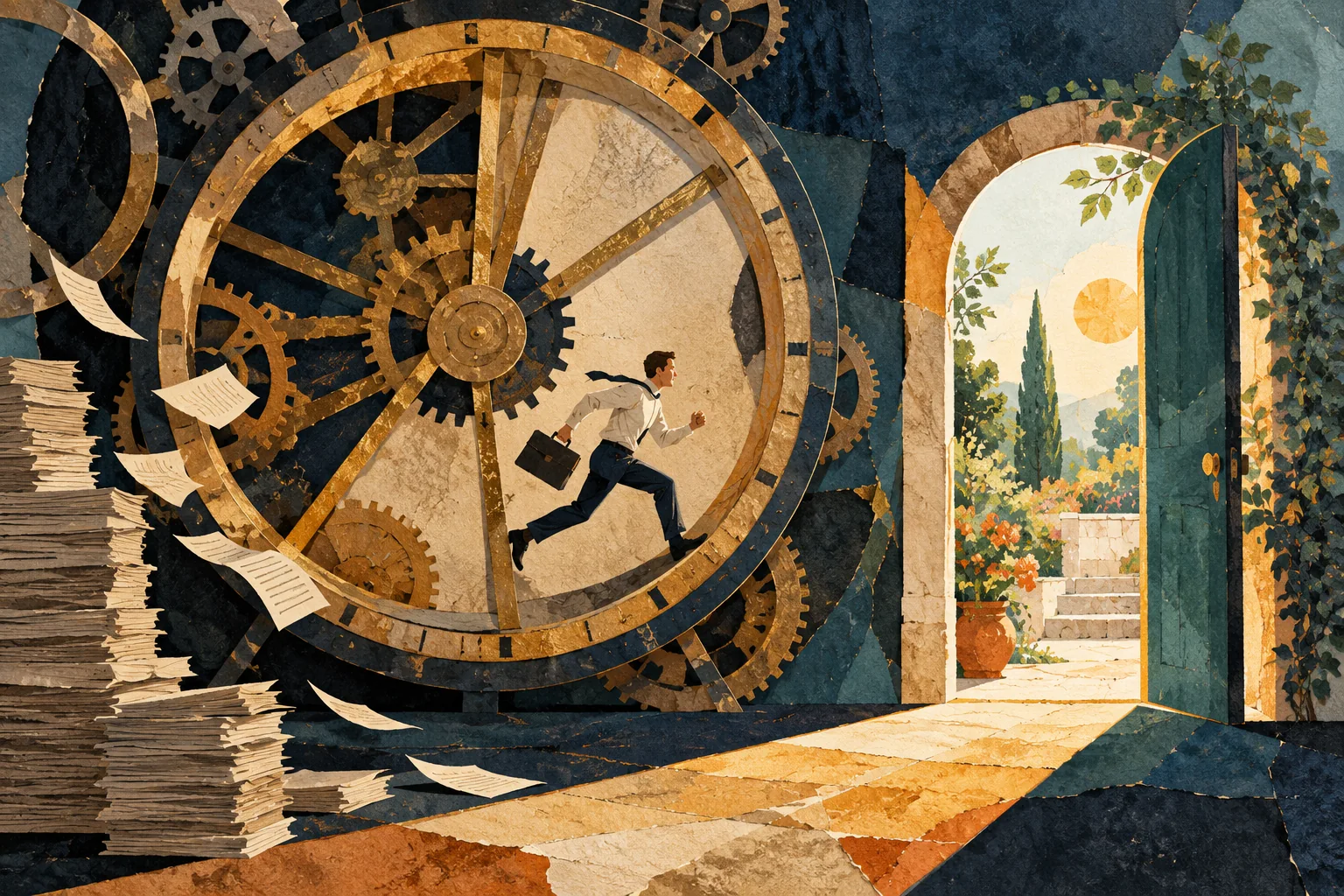
The future usually arrives in an illustration with clean glass, improbable greenery, and no visible maintenance access. Somewhere outside the frame, a person is trying to find the valve.
We enjoy the moment of invention. It gives us a before and an after, a name, and something to announce. Maintenance offers a less dramatic achievement: the useful thing remains useful tomorrow.
That difference in storytelling can become a difference in priorities. A new dashboard gets applause. Correcting the data pipeline that keeps the dashboard honest may receive a brief thank-you, if anyone notices.
Reliability is work that succeeded quietly
A well-maintained system hides much of its own achievement. The room is ready. The equipment works. The records are understandable. The website loads. Nothing spectacular happens, which is precisely what the work was intended to accomplish.
This makes maintenance difficult to evaluate through visible crises alone. If recognition arrives only when someone saves the day, prevention becomes strangely unrewarding. The organization may learn to celebrate dramatic recovery while overlooking the people who reduced the need for it.
Ask what stayed dependable and why. That question can reveal effort that a list of completed projects will miss.
Every launch creates an obligation
Adding a tool means adding updates, documentation, access decisions, and a future migration. Adding a content section means checking links, correcting errors, and deciding what happens to old material. The launch cost is only the opening chapter.
Before approving a new feature, name its future owner. What must be checked regularly? How will a failure become visible? What happens if the original builder leaves?
These are not arguments against ambition. They are ways to prevent ambition from becoming a collection of abandoned interfaces.
Design for the person who comes next
Clear file names, ordinary formats, and short instructions are acts of cooperation across time. The future maintainer may be someone else. More embarrassingly, it may be you after six months, confronting a folder called final-final-actually-use-this.
A system does not become professional by being difficult to understand. Complexity sometimes earns its place. When it does, it should explain itself.
This applies beyond software. Labels, access paths, inspection routines, and ownership records can make the difference between an easy repair and an afternoon of institutional archaeology.
Put upkeep into the plan
For one project you manage, list three recurring obligations created by its existence. Assign an owner and a reasonable review interval to each. Then identify a sign that the project should be simplified or retired.
Retirement belongs in maintenance planning too. Preserving every system forever is not stewardship; sometimes it is fear wearing a very large key ring.
Innovation asks what we could make possible. Maintenance asks whether that possibility can remain dependable in ordinary life. The second question is less likely to appear on a launch poster, but it is where the future spends most of its time.
Stay curious.
Martin Lumen